
When interest rates move and rents shift, the investors who stay ahead are the ones who can see their cash flow clearly, rent coming in, costs going out, and the net position across every property. The problem is that most “property apps” aren’t built for that. Some are research and buying tools, some are full accounting platforms, and a few are simple portfolio trackers. Choosing the right one comes down to how well it handles three things: rental income tracking, expense visibility, and cash flow reporting.
This guide compares four Australian property portfolio apps against those criteria so you can pick the right tool faster. The apps are listed alphabetically, not ranked, the best choice depends on whether you want deep accounting, full-service buying support, research-grade forecasting, or a simple live read on your numbers.
General information only – not financial advice. Pricing and features are current at the time of writing; check each provider for the latest.
What should you look for in a property app for cash flow?
A good cash flow app should keep your rental income, expenses, and net position current without turning into a second job. The five criteria below are the ones that actually separate a useful tool from a glorified spreadsheet.
- Rental income tracking – Does it record rent per property, and can it handle multiple properties cleanly?
- Expense visibility – Can you see where your money goes (rates, insurance, repairs, management fees, loan interest), ideally categorised rather than lumped together?
- Cash flow reporting – Does it show your true net position – income minus costs – per property and across the whole portfolio?
- Portfolio and loan coverage – Does it track values, loan balances, and equity so cash flow sits in the context of your overall position?
- Automation – Does data flow in automatically (bank feeds, Open Banking, AI document reading), or are you keying everything in by hand?
Manual entry is where most tracking efforts quietly die – abandoned within a few weeks. The more an app automates, the more likely your numbers stay accurate enough to act on.
The best property portfolio apps in Australia for cash flow
-
The Property Accountant
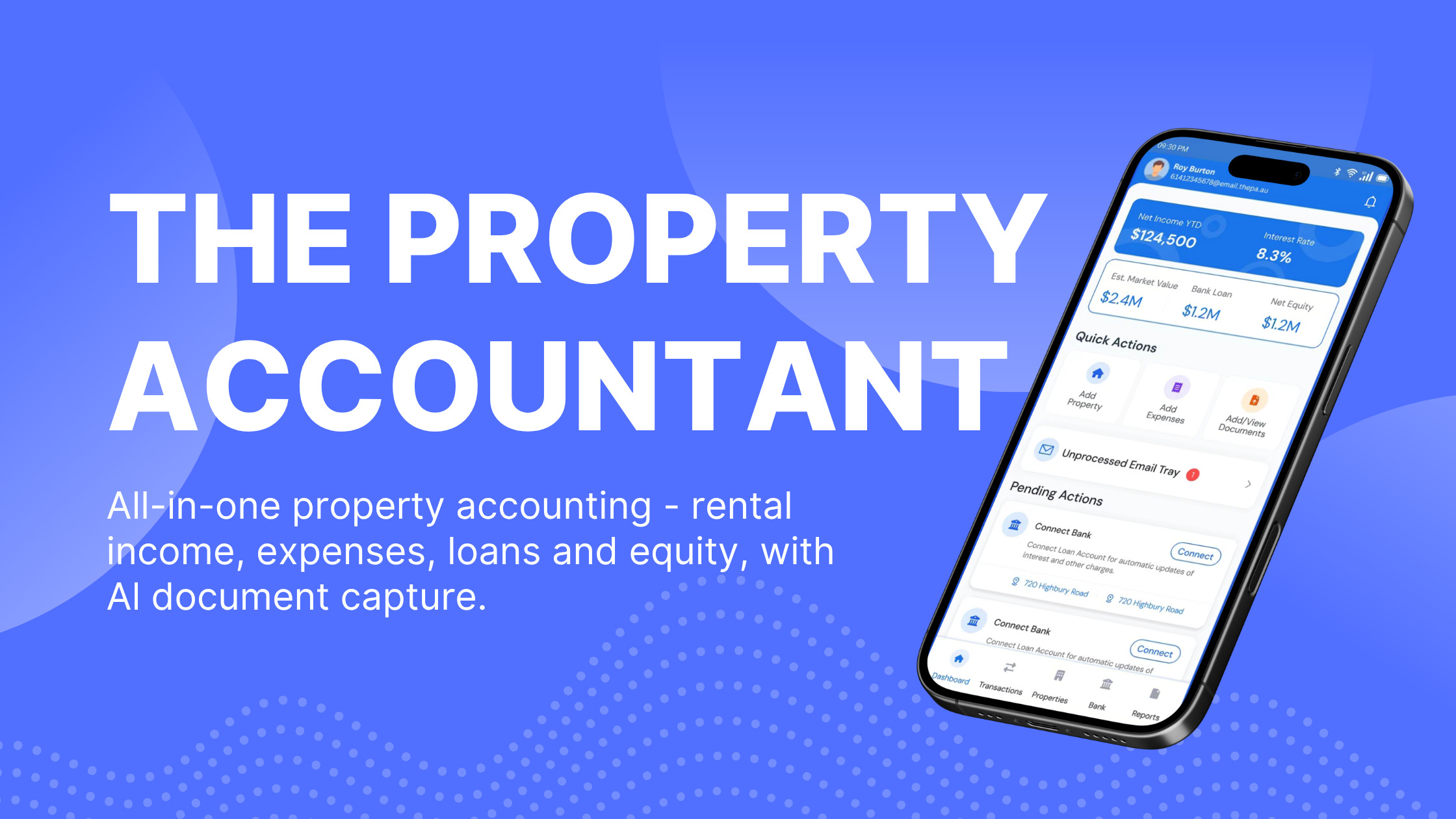
Best for: Investors who want accounting-grade expense tracking and tax-ready reports.
The Property Accountant is an all-in-one property accounting and finance platform built for Australian investors, accountants, and mortgage brokers. It tracks rental income, expenses, loans, equity, and interest rates, and its standout feature is AI-powered document extraction: email a settlement statement, rental summary, or invoice to your unique address, and it auto-populates your financial records. A depreciation calculator and automated tax-position estimates round out a genuinely deep accounting toolset, and you can grant one-click access to your accountant or broker.
Where it shines: Expense visibility and tax readiness. If your priority is never missing a deduction and handing your accountant a clean file, this is the most thorough option here.
Where it’s thinner: It’s purpose-built for property accounting, so it’s more limited for investors juggling other income streams (shares, business income), and the depth can be more than someone who just wants a quick cash flow snapshot needs.
Pricing: Subscription-based; current pricing is listed on their website. Available on iOS and Android.
-
Property Dollar
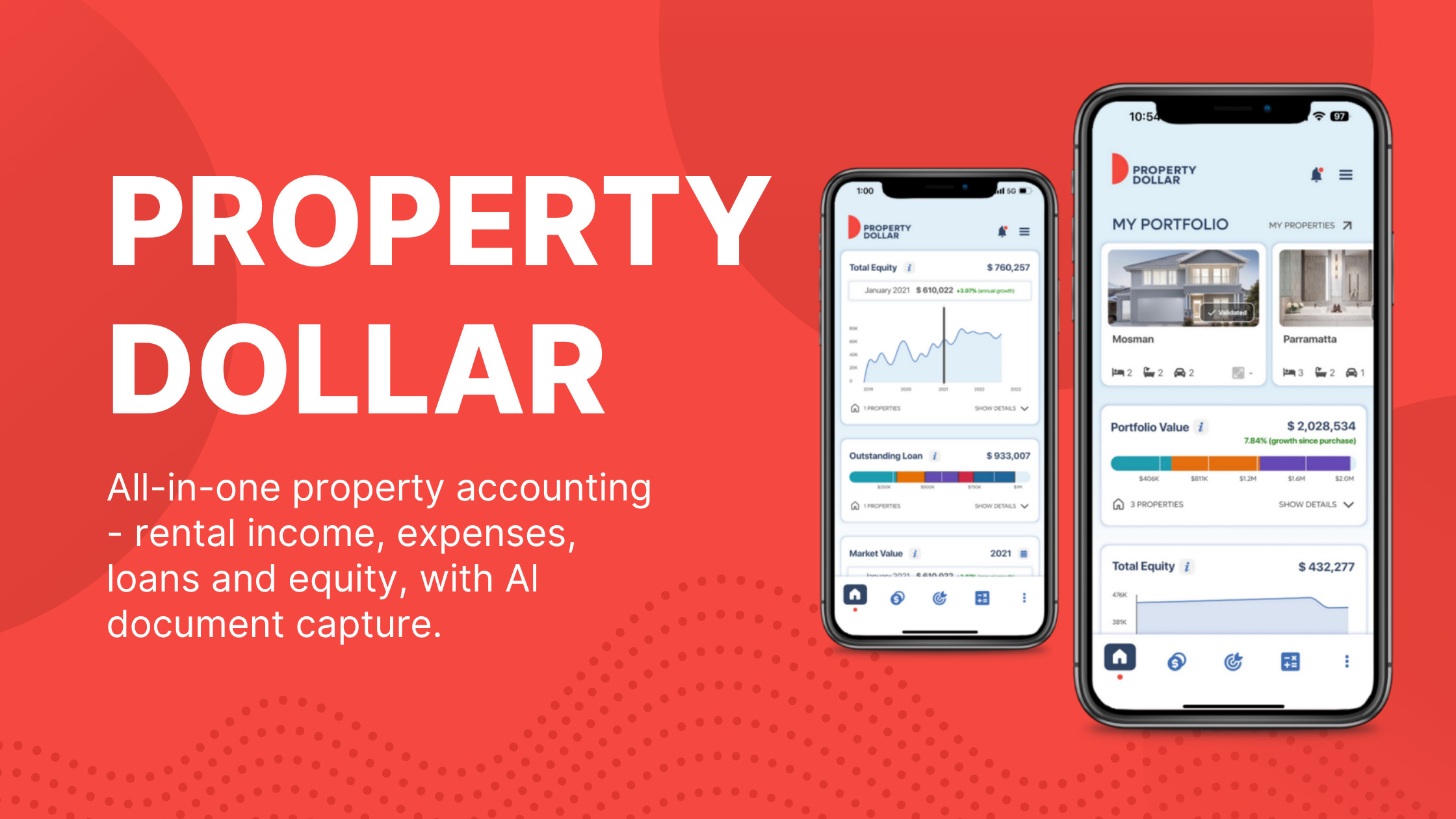
Best for: Investors who want a simple, live view of loan, equity, and cash flow position.
Property Dollar is an Australian property app built around a portfolio tracker and a cash flow calculator, with the goal of keeping your numbers current with minimal effort. Its differentiator is Open Banking on the Premium tier, which connects to your home loan accounts so your loan balances – and therefore your equity and LVR – stay accurate automatically. The cash flow calculator shows your net position per property and lets you stress-test repayments against rate rises, and Loan Buddy monitors your loan performance and flags when a better deal may be worth investigating.
Where it shines: Simplicity and live loan and equity data. Most users have their first property tracked in about ten minutes, and the Open Banking connection means your equity figure reflects today’s reality rather than an old estimate.
Where it’s thinner: It’s a tracking and planning tool, not an accounting platform. Open Banking here keeps your loan and equity current – it isn’t expense capture. For that, you’ll still want a dedicated tax product or an accountant. Loan Buddy surfaces opportunities; the refinancing decision itself sits with your broker or lender.
Pricing: Free to download, with a Premium tier at $9.99/month for Open Banking. Available on iOS and Android.
-
PropHero

Best for: Hands-off investors who want a free portfolio performance snapshot, especially if they buy through PropHero.
PropHero is primarily a data-driven, end-to-end property investment service – it helps clients find, buy, and manage investment properties using analytics, AI, and a network of local professionals. The free PropHero Portfolio app is a companion to that service: it lets anyone monitor properties in one place, with real-time valuations, rental yield, capital gains, loan balances, and cash flows, plus notifications when interest rates or relevant market data change.
Where it shines: It’s free, clean, and good for a high-level view of how each property is performing. The market-change nudges are useful prompts to review your position.
Where it’s thinner: The app is built around performance tracking and opportunity prompts rather than detailed expense ledgers or itemised cash flow accounting. It’s at its most powerful as part of PropHero’s full buyer’s-agent offering, which is a paid, hands-on service rather than a DIY tracking tool.
Pricing: The Portfolio app is free on iOS and Android. PropHero’s core buying and management service is fee-based.
-
Real Estate Investar
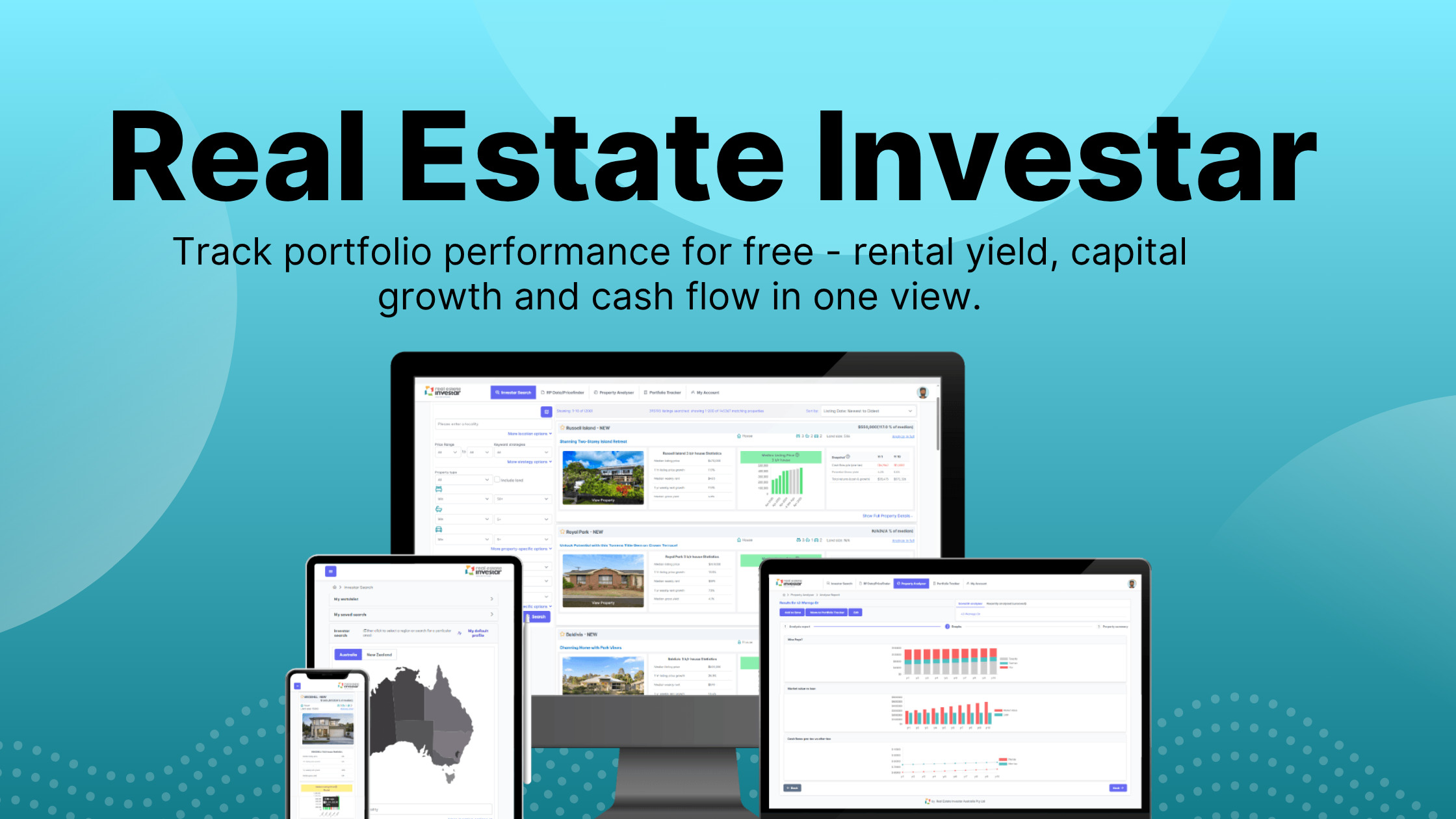
Best for: Research-driven investors who want detailed cash flow forecasting alongside deal-finding.
Real Estate Investar (part of MRI Software) has been around since 2006 and is built as a full property investment platform rather than a lightweight app. Its Property Analyser generates 10-year before- and after-tax cash flow and capital growth forecasts, Investar Search filters listings by strategy (including positive cash flow), and the Portfolio Tracker monitors your portfolio’s actual performance – cash flow and equity – against your original forecasts. A CoreLogic RP Data bundle is available for deeper market data.
Where it shines: Forecasting depth and research. If you want to model a deal’s cash flow over a decade before you buy, then track reality against that forecast, few tools here go deeper.
Where it’s thinner: It’s research- and acquisition-focused and sits at a higher price point, which can be more platform than someone who just wants to watch their existing portfolio’s monthly cash flow.
Pricing: Plans start from $99/month (publicly listed). Web-based platform.
How do these apps compare?
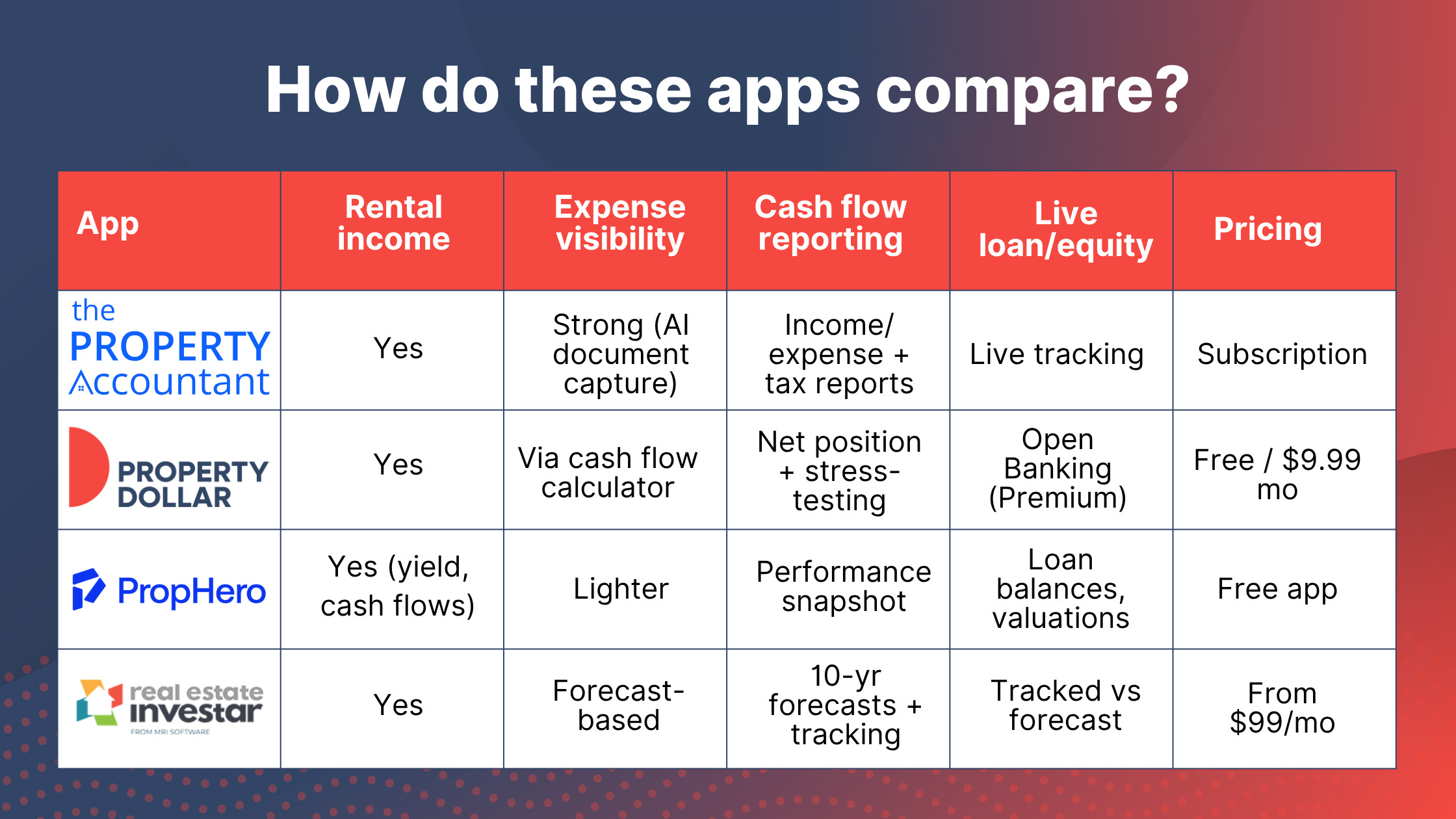
The table is directional rather than a scorecard – each app is strong in a different place, so the right pick depends on what you’re optimising for.
How do you choose the right app?
Match the tool to the job rather than the longest feature list:
- You want every expense captured and tax-ready reports → The Property Accountant.
- You want a simple, live read on loan, equity, and cash flow with minimal effort → Property Dollar.
- You want a free performance snapshot, or you’re buying through a full-service team → PropHero.
- You want deep forecasting and research before you buy → Real Estate Investar.
Many serious investors end up pairing tools – a tracker for the live picture and an accountant or accounting app at tax time. The point is to be honest about which problem you’re actually trying to solve.
Where Property Dollar fits
If your main frustration is not knowing your real cash flow and equity position right now, Property Dollar is built for exactly that. The portfolio tracker gives you a single live view, the cash flow calculator shows your true net position and lets you stress-test against rate rises, and Open Banking on Premium keeps your loan balances, and your equity, accurate without you touching them. It won’t replace your accountant, and it doesn’t pretend to. It keeps the numbers that drive your next decision current and clear.
Free on iOS and Android. Add your first property and have live tracking running in about ten minutes.
Frequently asked questions
What is the best property app for tracking cash flow in Australia?
There isn’t a single best app - it depends on your priority. For accounting-grade expense tracking and tax reports, The Property Accountant is the deepest. For a simple live view of loan, equity, and cash flow, Property Dollar is the most streamlined. For detailed forecasting and research, Real Estate Investar goes furthest. For a free performance snapshot, PropHero Portfolio works well.
Which property app shows my true cash flow position?
Apps that net your rental income against your interest and expenses show your true cash flow. Property Dollar’s cash flow calculator does this per property and lets you stress-test repayments, while Real Estate Investar models it over a 10-year horizon and The Property Accountant builds it from captured income and expense records.
Do any of these apps connect to my bank automatically?
Property Dollar uses Open Banking on its Premium tier to keep your home loan balances and equity current automatically. The Property Accountant uses AI-powered document extraction to auto-populate records. PropHero pulls real-time valuations and loan data into its portfolio view. Always check each provider’s current capability, as features change.
Are property portfolio apps free in Australia?
Some are. PropHero Portfolio is free to download, and Property Dollar is free with a paid Premium tier ($9.99/month) for Open Banking. The Property Accountant and Real Estate Investar are subscription-based, with Real Estate Investar starting from $99/month.
Do I need a separate accountant if I use one of these apps?
Usually, yes. Even the accounting-focused apps are designed to make tax time easier, not to replace professional advice. Tracking apps like Property Dollar deliberately stay in the portfolio and cash flow lane and don’t handle depreciation schedules or ATO-style deduction reporting, so a registered accountant still has a role.
Can these apps tell me when to refinance?
They can flag when it may be worth investigating - for example, when your LVR crosses a useful threshold or your rate looks uncompetitive. Property Dollar’s Loan Buddy monitors loan performance and surfaces potential opportunities, but the refinancing decision itself, and the assessment of your full circumstances, sits with you and your broker or lender.